

This guide covers what Pakistani applicants actually ask about the USEFP Fulbright Scholarship: the CGPA and years-of-education requirement, the mandatory GRE 145/145 threshold, the stipend amount, TOEFL, application steps, and the current 2027 and 2028 cycle deadlines.
Content written by LearnViaHub team, reviewed by Christian Chinonso, Founder, LearnViaHub.
📅 Last Updated: August 2026 — covers the 2027 cycle (closed) and the upcoming 2028 cycle
✅ Fact-Checked Using: USEFP (United States Educational Foundation in Pakistan), Fulbright Foreign Student Program official guidelines
⏱️ Reading Time: Approximately 8–10 minutes
📌 Quick Navigation
✓ Why Trust This Guide?
This guide is based on the latest information published by USEFP (the Fulbright Commission in Pakistan) and the official Fulbright Foreign Student Program. GRE thresholds, education-year requirements, bond terms, and stipend figures cited below are sourced directly from USEFP’s official Fulbright Degree Program page and USEFP’s own program announcements. Because Fulbright rules and cohort sizes change annually, always verify details on the USEFP website before applying.
Fulbright Scholarship Snapshot – Pakistan
| Sponsor | U.S. Department of State, administered by USEFP |
| Funding | Fully Funded (tuition, stipend, airfare, health insurance, textbook allowance) |
| Degree Levels | Master’s and PhD |
| CGPA / Academic Requirement | No single official minimum CGPA — see the CGPA section below for how USEFP actually evaluates your record |
| Eligible Fields | All fields except clinical medicine — energy, water, agriculture, public health, education, and climate change are particularly encouraged |
| English Test | TOEFL for shortlisted candidates in the current cycle (USEFP has used the Duolingo English Test in some past cycles — confirm the current requirement when shortlisted) |
| GRE Requirement | Mandatory for all applicants — minimum 145 in each section (Verbal and Quantitative) |
| Work Experience | Required only for MBA and Public Policy/Administration applicants (2 years) |
| 2027 Cohort | Applications closed April 1, 2026. USEFP has stated it is targeting around 100 scholarships for this cohort. |
| 2028 Cohort | Expected to open around December 2026/early 2027, based on USEFP’s typical annual cycle — confirm exact dates on usefp.org |
| Official Link | usefp.org |
📊 How Competitive Is the Fulbright Pakistan Program?
USEFP has stated it is targeting around 100 Fulbright scholarships for the 2027 cohort across Master’s and PhD programs. Since 2005, the program has awarded nearly 3,000 fully funded scholarships to Pakistani students. It receives thousands of applications annually, making a strong GRE score, clear study objectives, and demonstrated leadership essential to standing out.
The 2027 cohort application cycle closed on April 1, 2026 and is now in the shortlisting/interview/selection stage. The 2028 cohort is the next opportunity — applications typically open in December, with results announced the following September. Always verify current dates on usefp.org.
📘 New to Fulbright? Start with our complete How to Apply for Fulbright Scholarship guide for a step-by-step walkthrough of the general process.
🌍 See all 25 country guides: Use the interactive country eligibility tool on our pillar page to compare requirements across countries.
Are You Eligible? Fulbright Pakistan Requirements
To apply as a Pakistani candidate through USEFP, you must:
- Be a citizen and permanent resident of Pakistan. Dual U.S./Pakistan nationals are not eligible.
- Hold the required degree level:
- Master’s applicants: A four-year Bachelor’s degree or a Bachelor’s + Master’s combination totaling 16 years of formal education from an accredited university.
- PhD applicants: A Master’s, M.Phil., or comparable degree (a minimum of 18 years of formal education) from an accredited university.
- Take the GRE General Test — it is mandatory for all applicants, with no exceptions. Under the current scoring system, a minimum score of 145 is required on each section (Verbal and Quantitative), with a higher score expected on the section most applicable to your field of study. See our GMAT vs GRE comparison for test guidance.
- Demonstrate English proficiency. Shortlisted candidates in the current cycle are required to take the TOEFL; USEFP has substituted the Duolingo English Test in some past cycles, so confirm the requirement in your specific cycle’s instructions.
- Commit to returning to Pakistan after completion. Successful candidates must sign a contract with USEFP binding them to return immediately after their program and serve Pakistan for the number of years equivalent to the length of their scholarship (minimum two years). PhD candidates must additionally post a bond with the HEC. Learn more about the J-1 visa and two-year residency rule.
⚠️ Important: The GRE must be taken early enough for official scores to arrive before the application deadline. There is no exemption from the GRE, even for humanities or arts fields.
What CGPA Do You Need for Fulbright Pakistan?
USEFP does not publish a single official minimum CGPA cutoff for Fulbright applicants — the requirement is stated as 16 years of formal education for Master’s applicants and 18 years for PhD applicants, combined with a “strong academic record,” rather than one fixed number. That said, applicants should understand how CGPA fits into the actual evaluation:
- Your CGPA is one part of a holistic review. USEFP has stated the process weighs academic performance, test scores, leadership potential, and demonstrated commitment to contributing to Pakistan’s development — not CGPA in isolation.
- Competitive applicants typically have a strong, consistent academic record throughout their degree, since Fulbright is merit-based and highly competitive relative to the roughly 100 scholarships awarded per cohort.
- If your university uses a CGPA scale different from a 4.0 system (common at many Pakistani universities), be prepared to explain your institution’s grading scale in your transcripts — USEFP’s application explicitly asks for an explanation of the grading scale used by the issuing university.
- A single average or lower semester does not automatically disqualify you. USEFP’s own guidance emphasizes overall merit and potential rather than a strict cutoff, so a strong overall trajectory and compelling study objectives can offset an uneven transcript.
If you need to convert your CGPA or percentage to compare against U.S.-style GPA scales for your application materials or target universities, our GPA to percentage converter can help.
How to Apply – Fulbright Pakistan Step by Step
The Pakistani Fulbright competition is managed entirely by the United States Educational Foundation in Pakistan (USEFP), with offices in Islamabad, Lahore, and Karachi. Follow these steps:
- Visit the USEFP website. USEFP typically opens applications for the next cohort in December, with a deadline in early spring the following year (the 2027 cohort’s deadline was April 1, 2026). Check usefp.org directly for the current 2028 cohort’s exact dates.
- Create an account on the online application portal. USEFP uses an online system for all submissions. Paper applications are not accepted.
- Prepare your documents. A complete application package includes:
- Online application form
- Three reference letters (academic or professional)
- Official GRE score report (sent directly from ETS to USEFP)
- Scanned transcripts, including an explanation of the grading scale of the university issuing the degree
- Valid passport copy
- Recent photograph
- Personal statement / study objectives
- Submit the online application before the deadline. Late or incomplete applications are not considered.
- Shortlisting and interview. A USEFP panel reviews applications. Shortlisted candidates are invited for an interview, typically between June and August. During this stage, you will also be required to take the English proficiency test currently in use for your cohort (TOEFL in the current cycle). Prepare with our Fulbright Interview Guide.
- Final selection and university placement. Results are typically announced around September. Successful candidates receive a Fulbright nomination, and the Institute of International Education (IIE) then helps place you at a U.S. university.
📅 Fulbright Pakistan Application Timeline – 2028 Cohort (Expected)
Dec 2026
Applications Expected to Open
~Apr 2027
Expected Deadline
Summer 2027
Shortlisting & Interviews
Fall 2027
Depart for the U.S.
These dates follow USEFP’s typical annual pattern and are not yet officially confirmed for the 2028 cohort. Exact dates are announced on usefp.org each cycle — verify before applying.
Note: The 2027 cohort application cycle closed on April 1, 2026 and is currently in the shortlisting/interview/selection stage, with results expected around September 2026.
What the Scholarship Covers
Fulbright Pakistan offers one of the most comprehensive funding packages:
- Full tuition and fees at a U.S. university
- Monthly living stipend (approximately $2,000, varies by city and cost of living)
- Round-trip international airfare
- Health and accident insurance
- Textbook and supplies allowance
- Visa support (J-1 Exchange Visitor Visa)
- Pre-departure orientation in Pakistan and enrichment activities in the U.S.
For a full breakdown of all benefits and budgeting tips, see our Fulbright Benefits & Funding Guide.
Tips to Strengthen Your Application
📝 1. Prepare for the GRE Early
Since the GRE is mandatory, a strong score can significantly boost your chances. Aim for a combined score above 300 (Verbal + Quantitative) if possible. Under USEFP’s current scoring guidelines, a minimum of 145 in each section is required, with higher expectations in the section most relevant to your field.
💡 GRE Reimbursement Opportunity: USEFP reimburses GRE costs for applicants at HEC-approved public universities who achieve a combined score of 300+ for engineering/science fields or 290+ for humanities/social science fields. Submit your reimbursement request with your complete application and official GRE scores attached — only a limited number are available per cycle (typically 30 first-come, first-served).
🎓 2. Don’t Let an Uneven CGPA Discourage You
USEFP evaluates applicants holistically rather than against a strict CGPA cutoff. If your transcript has a weaker semester, use your personal statement to show growth, context, and a strong overall trajectory rather than assuming you’re disqualified. See the CGPA section above for more detail.
🎯 3. Tailor Your Study Objectives to Pakistan’s Needs
USEFP particularly encourages applicants in energy, water, agriculture, public health, education, environmental science, and climate change. Aligning your proposal with these priority fields can strengthen your application significantly. Clearly explain how your chosen degree will address a specific challenge or opportunity in Pakistan.
💼 4. Know the Work Experience Rules
Recent graduates are strongly encouraged to apply for most Master’s fields. However, MBA and Public Policy/Administration applicants require 2 years of prior work experience — this is a field-specific requirement, not a general rule.
✍️ 5. Be Precise in Your Essays
Follow the prompts exactly. USEFP often provides detailed essay questions; generic responses will not stand out. Your personal statement should tell a compelling story about your leadership, community involvement, and vision for Pakistan’s future.
🎤 6. Practice for the Interview
The USEFP panel will ask about your study plan, career goals, and how you will use your degree to benefit Pakistan. Prepare with our Fulbright Interview Guide and practice answering questions about your field of study, your commitment to returning to Pakistan, and your leadership experience.
👥 7. Choose Referees Who Can Speak to Your Leadership
USEFP looks for candidates who have demonstrated community involvement and the potential to make an impact. Choose referees — academic or professional — who can provide specific examples of your leadership, initiative, and character.
Frequently Asked Questions – Pakistan
1. How much CGPA is required for Fulbright Pakistan?
There is no single published minimum CGPA. USEFP requires 16 years of formal education for Master’s applicants (18 for PhD) and evaluates applicants holistically on academic record, GRE score, leadership, and study objectives — not CGPA alone.
2. How much is the Fulbright stipend?
The living stipend is approximately $2,000 per month, though the exact amount varies by the cost of living in your host city. The scholarship also covers full tuition, airfare, health insurance, and a textbook allowance.
3. Is the GRE required for all Fulbright Pakistan applicants?
Yes. The GRE is mandatory for both Master’s and PhD applicants. There are no exceptions. Under the current scoring system, a minimum score of 145 in each section (Verbal and Quantitative) is required.
4. Can I apply if I have a two-year bachelor’s degree?
You must have a total of 16 years of formal education for Master’s programs. A two-year bachelor’s degree alone is not sufficient; you would need an additional two-year master’s degree to meet the requirement.
5. Are there any field restrictions for Pakistani applicants?
All academic disciplines are eligible except clinical medicine. USEFP particularly encourages applicants in energy, water, agriculture, public health, education, environmental science, and climate change.
6. Do I need work experience?
Only for MBA and Public Policy/Administration applicants (2 years required). For all other Master’s fields, recent graduates are strongly encouraged to apply. For PhD programs, work experience in teaching, research, or the public sector is highly desirable but not mandatory.
7. What is the PhD bond requirement?
Successful PhD candidates must sign a bond with the HEC (Higher Education Commission) in addition to the standard USEFP contract. This binds them to return to Pakistan immediately after their program and serve for the number of years equivalent to the length of their scholarship (minimum two years).
8. Can I bring my family to the U.S. on a Fulbright scholarship?
Yes, dependents can accompany you on J-2 visas, but the stipend is for one person only. You must prove you can support them financially.
9. When is the application deadline for the next Fulbright Pakistan cycle?
The 2027 cohort closed on April 1, 2026 and is now in the shortlisting/selection stage. The 2028 cohort is expected to open around December 2026, following USEFP’s typical annual pattern. Always verify exact dates on usefp.org before applying, as USEFP announces each cycle’s dates a few months in advance.
Sources
- USEFP Fulbright Degree Program — Official Page
- Fulbright Foreign Student Program — Global
- United States Educational Foundation in Pakistan (USEFP)
Official Resources for Pakistani Applicants
- USEFP (Pakistan Fulbright Commission): usefp.org
- Fulbright Degree Program page: usefp.org/scholarships/fulbright-degree.cfm
- Fulbright Foreign Student Program (Global): foreign.fulbrightonline.org
- General application guide: How to Apply for Fulbright Scholarship
- MBA-focused guide: Fulbright MBA Scholarship Guide
- Pillar page with country tool: Fulbright Foreign Student Program
Editorial Disclaimer
This guide is published by LearnViaHub for educational purposes. Scholarship rules, deadlines, GRE score thresholds, cohort sizes, and reimbursement policies may change. Always verify details on the official USEFP website (usefp.org) before applying.
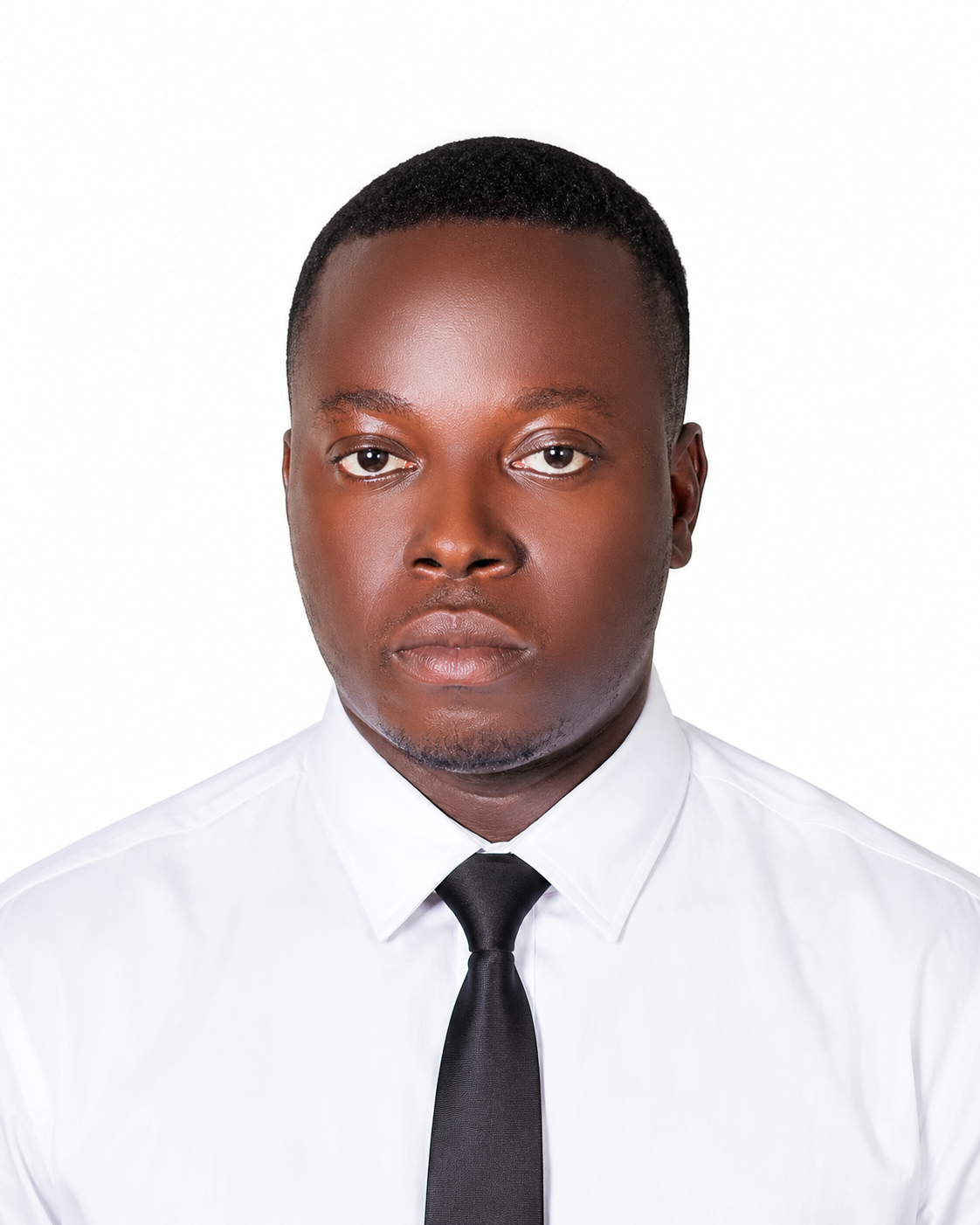
Christian Chinonso is the founder of LearnViaHub, with 6+ years of research experience in international education, GPA systems, and study-abroad guidance for international students.Christian Chinonso is the founder of LearnViaHub, with 6+ years of research experience in international education — including GPA systems, scholarships, student financing, and study-abroad guidance — for students worldwide.