
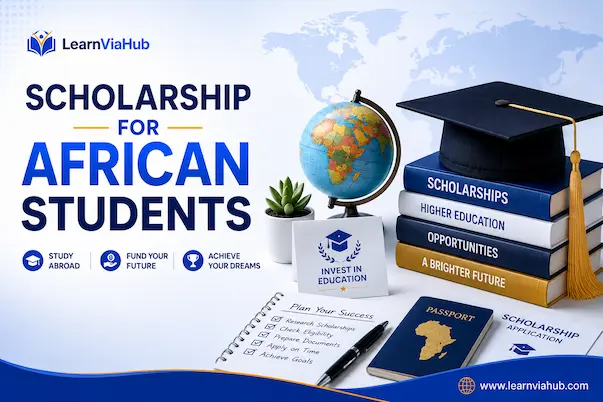
Quick Answer
The biggest fully funded scholarships for Africans — for the 2026–2027 cycle — are the Mastercard Foundation Scholars Program (60+ partner universities, full tuition plus stipend, no single central deadline), Chevening (fully funded UK Master’s; 2027/28 applications open 4 August 2026 and close 6 October 2026, 11:00 UTC), Commonwealth Scholarships (£1,712/mo outside London, £2,000/mo in London; the 2027-entry round closes 20 October 2026, 16:00 BST), Australia Awards Africa (2028 intake opens February 2027), and the Rhodes Scholarship (20 awards for Africa each year, via six country constituencies).
The Mandela Washington Fellowship — a six-week US leadership programme, not a degree — is open now for 2027, closing 13 October 2026, 16:00 GMT. Foundation routes include the Aga Khan Foundation ISP (50% grant / 50% loan, next cycle opens early 2027) and DAAD In-Country/In-Region (rolling, institution-specific). The eligibility matrix below shows which schemes accept which African nationalities — the single biggest filter that wastes applicants’ time. Check country eligibility before writing a single essay.
Scholarships for African Students at a Glance
| Detail | Information |
|---|---|
| Biggest pitfall | Country eligibility — Commonwealth excludes some African countries; Australia Awards Africa covers 25 of 54. Verify your nationality before applying. |
| Largest fully funded scheme | Mastercard Foundation Scholars Program — 60+ partner universities, full tuition + living costs, undergraduate and postgraduate |
| Best UK government route | Chevening — fully funded one-year Master’s; 2027/28 applications close 6 October 2026, 11:00 UTC |
| Best postgraduate research route | Commonwealth Scholarships — £1,712/mo (outside London) or £2,000/mo (London) + full fees, Master’s and PhD |
| Most prestigious award | Rhodes Scholarship — Oxford, 20 awards for Africa annually, six country constituencies |
| Time-sensitive — act now | Mandela Washington Fellowship 2027 — closes 13 October 2026, 16:00 GMT |
| Foundation routes | Aga Khan Foundation ISP (50% grant / 50% loan), DAAD In-Country/In-Region, Pan African University |
Which Scholarships Are You Actually Eligible For? The Country-by-Scheme Matrix
This is the most important table on the page. The biggest source of wasted effort for African applicants is applying to a scheme that excludes their nationality. Commonwealth Scholarships cover most — but not all — African countries.
Australia Awards Africa covers 25 of 54. Chevening accepts applicants from over 100 countries and territories, but the list shifts year-to-year with UK foreign policy. Check the matrix, then verify on the scheme’s own eligibility page one more time before you invest hours in an application.
| Scheme | Open to which African nationalities | Level | Value | Return-home |
|---|---|---|---|---|
| Mastercard Foundation | ✅ Open to African citizens broadly; must apply to a partner university | UG + PG | Full tuition + accommodation, books, mentoring (varies by partner) | Commitment to give back |
| Chevening | ✅ Over 100 countries and territories — official dropdown lists eligible nationalities; verify your specific country on chevening.org/apply | One-year taught Master’s only (research Master’s not eligible) | Full tuition + monthly stipend + flights + visa + arrival allowance | Yes — 2 years |
| Commonwealth Scholarships | ⚠️ Commonwealth citizens only — includes most, not all, African countries | Master’s + PhD | Full fees + £1,712/mo (non-London) or £2,000/mo (London) | Yes — development alignment |
| Australia Awards Africa | ✅ 25 named countries (2027 intake list — rotates annually): Algeria, Angola, Botswana, Côte d’Ivoire, DRC, Egypt, Ethiopia, Ghana, Guinea, Kenya, Madagascar, Malawi, Mauritius, Morocco, Mozambique, Namibia, Nigeria, Rwanda, Sierra Leone, South Africa, Tanzania, The Gambia, Uganda, Zambia, Zimbabwe | Master’s + PhD + short courses | Full tuition + stipend + flights; age 25+, 5 years’ work experience required | Yes — 2 years |
| Rhodes Scholarship | ✅ Six African constituencies: East Africa, Kenya, Southern Africa, West Africa, Zambia, Zimbabwe + Global Scholarship for other African countries | Postgraduate (Oxford) | Full fees + stipend | No |
| Mandela Rhodes | ✅ All African citizens — age 19–29 in the year of applying | Postgraduate (in South Africa) | Itemized: tuition, accommodation, meals, book + medical + personal allowance, flights | No |
| Mandela Washington Fellowship | ✅ Sub-Saharan African citizens | Six-week leadership programme (not a degree) | Fully funded programme + US placement | Yes |
| Aga Khan Foundation ISP | ⚠️ Country-based — apply via AKF office in your country of residence | Master’s priority; PhD case-by-case | 50% grant / 50% loan | Yes — return to home country |
| DAAD In-Country/In-Region | ✅ Rolling; institution-specific | Master’s + PhD | Full funding | No |
| Pan African University | ✅ All African Union citizens | Master’s + PhD | Fully funded (AU flagship) | Check current call |
Key rule: Country eligibility changes year-to-year, especially for Chevening and Australia Awards, which follow UK and Australian foreign-policy priorities. The Australia Awards list above is the 2027 intake list — the 2028 list is not yet published and historically rotates some countries (the 2026 list, for example, included Benin and Senegal, which the 2027 list replaces with Guinea and The Gambia). Always verify your nationality on the scheme’s own eligibility page before starting any application.
Government-Funded Scholarships for African Students
Government schemes are the deepest and most reliable funding pool for African students — and the most under-used. Each is open to specific nationalities and requires a return-home or development-impact commitment.
| Scheme | Country | 2026–2027 Cycle Status | Value |
|---|---|---|---|
| Chevening | UK | 2027/28 intake: opens 4 August 2026, 11:00 UTC; closes 6 October 2026, 11:00 UTC. One-year taught Master’s only. | Full tuition + monthly stipend + flights + visa + arrival allowance |
| Commonwealth Scholarships | UK | Sept 2027 entry: applications close 20 October 2026, 16:00 BST (exact times vary — verify on cscuk.fcdo.gov.uk) | Full fees + £1,712/mo (non-London) or £2,000/mo (London) |
| Australia Awards Africa | Australia | 2027 intake closed. 2028 intake opens February 2027. | Full tuition + stipend + flights; age 25+, 5 years’ work experience required; return-home required |
| DAAD In-Country/In-Region | Germany (via African host institutions) | Rolling — no central deadline. Institution-specific, spanning 2027 intakes. | Full funding at African host university |
| Pan African University | African Union | Next call for 2027 entry — check AU/PAU announcements (au.int) | Fully funded (AU flagship) |
How to choose: If you are a Commonwealth citizen (which covers most African countries), Commonwealth Scholarships are the strongest UK route — they fund Master’s and PhD and carry one of the highest stipends in the sector. If your country appears on the Australia Awards Africa list of 25, that is a fully funded route with return-home obligations. Chevening is the broadest and most prestigious UK route — over 100 countries, but one-year taught Master’s only. DAAD In-Country/In-Region is the best option if you want to remain on the continent while studying.
Foundation Scholarships for African Students
Foundation schemes are often less competitive than government schemes and more flexible on nationality — but each has a specific structure you need to understand.
| Foundation | Programme | Structure | Value |
|---|---|---|---|
| Mastercard Foundation | Scholars Program | 60+ partner universities/NGOs across Africa, North America, and Europe. No single central deadline — each partner sets its own. Apply through the partner institution. | Full tuition + accommodation, books, mentoring (varies by partner) |
| Aga Khan Foundation | International Scholarship Programme (ISP) | Decentralized: apply via your country’s Aga Khan Foundation office. Master’s priority; PhD case-by-case. 2026–2027 cycle is closed; next cycle opens early 2027. | 50% grant / 50% loan (repayable). Loan terms not published — check your AKF country office for current interest and service charge. |
| Mandela Rhodes Foundation | Mandela Rhodes Scholarship | Postgraduate study in South Africa. African citizenship required. Age 19–29 in the year of applying. The Class of 2028 round opens 9 March 2027. | Itemized package: tuition, accommodation, meals, study materials, medical aid, personal allowance, flights |
Fellowships and Leadership Programmes
Not all fully funded opportunities are degree scholarships. Several of the highest-profile programmes for African students are short leadership fellowships — worth knowing about because they build networks and often lead to further funding.
| Programme | Host | 2026–2027 Status | Value |
|---|---|---|---|
| Mandela Washington Fellowship | US Department of State | 2027 cycle is OPEN — applications close 13 October 2026, 16:00 GMT. Official site: mandelawashingtonfellowship.org. (Update: an earlier version of this page said no 2027 cycle was confirmed — that is now incorrect.) | Fully funded six-week US leadership programme; alumni network access |
| Rhodes Scholarship | Rhodes Trust / University of Oxford | Deadlines vary by constituency. Southern Africa 2027 cycle: opened 1 June 2026, closed 3 Aug 2026. Other African constituencies have their own windows. | Full fees + stipend for postgraduate study at Oxford |
Rhodes numbers to know: Over 100 Rhodes Scholarships are awarded annually worldwide. 20 of those are for African students, distributed across six named constituencies (East Africa, Kenya, Southern Africa, West Africa, Zambia, Zimbabwe) plus a Global Scholarship for African students from other countries. Do not conflate the two figures — the Africa allocation is 20, not 100.
How to Apply for Scholarships as an African Student
- Check your country’s eligibility first — before anything else. This is the single biggest filter. Commonwealth excludes some African countries. Australia Awards Africa covers 25 of 54. Chevening covers over 100 but shifts year-to-year. Confirm on the scheme’s own eligibility page, not a third-party list.
- Apply to the government scheme first, the university second. Chevening, Commonwealth, Australia Awards, DAAD, and the Pan African University are the deepest funding pools. Most have one window per year and require you to have (or be applying for) a place at a university — run both applications in parallel.
- Note which schemes require a return-home commitment. Chevening requires two years; Australia Awards requires two years; Commonwealth requires development alignment; Mastercard Foundation expects a “give-back” commitment. These are not optional — build them into your plans, not your essays alone.
- For Mastercard Foundation, apply through a partner university — not the Foundation. There is no central Mastercard Foundation application. You must first be admitted to (or apply to) a partner institution, then apply for the scholarship through that institution. This is the most misunderstood part of the scheme.
- Use the deadline calendar: Chevening (6 Oct 2026, 11:00 UTC) → Mandela Washington Fellowship (13 Oct 2026, 16:00 GMT) → Commonwealth (20 Oct 2026, 16:00 BST) → Mandela Rhodes (opens March 2027) → Australia Awards (opens Feb 2027) → Aga Khan Foundation (opens early 2027).
- Prepare documents in advance. Transcripts, CV, personal statement, 2–3 recommendation letters. Government schemes typically want leadership and development-impact evidence, not just academic merit. See our Scholarship CV guide and essay guide.
- Budget for the funding gap. Visa fees, flights, and first-month living costs are rarely covered by partial awards. For the UK, the Immigration Health Surcharge (~£776/year) is a specific pre-arrival cost.
Continue your scholarship research:
Frequently Asked Questions
What are the best fully funded scholarships for African students?
▼
Which scholarships can African students apply for right now?
▼
How do I apply for the Mastercard Foundation Scholars Program?
▼
Do I need to return to Africa after my scholarship?
▼
Is the Mandela Washington Fellowship a scholarship?
▼
Which scholarships are open to all African nationalities?
▼
Can African students get fully funded scholarships in Europe?
▼
Do I need IELTS or TOEFL for these scholarships?
▼
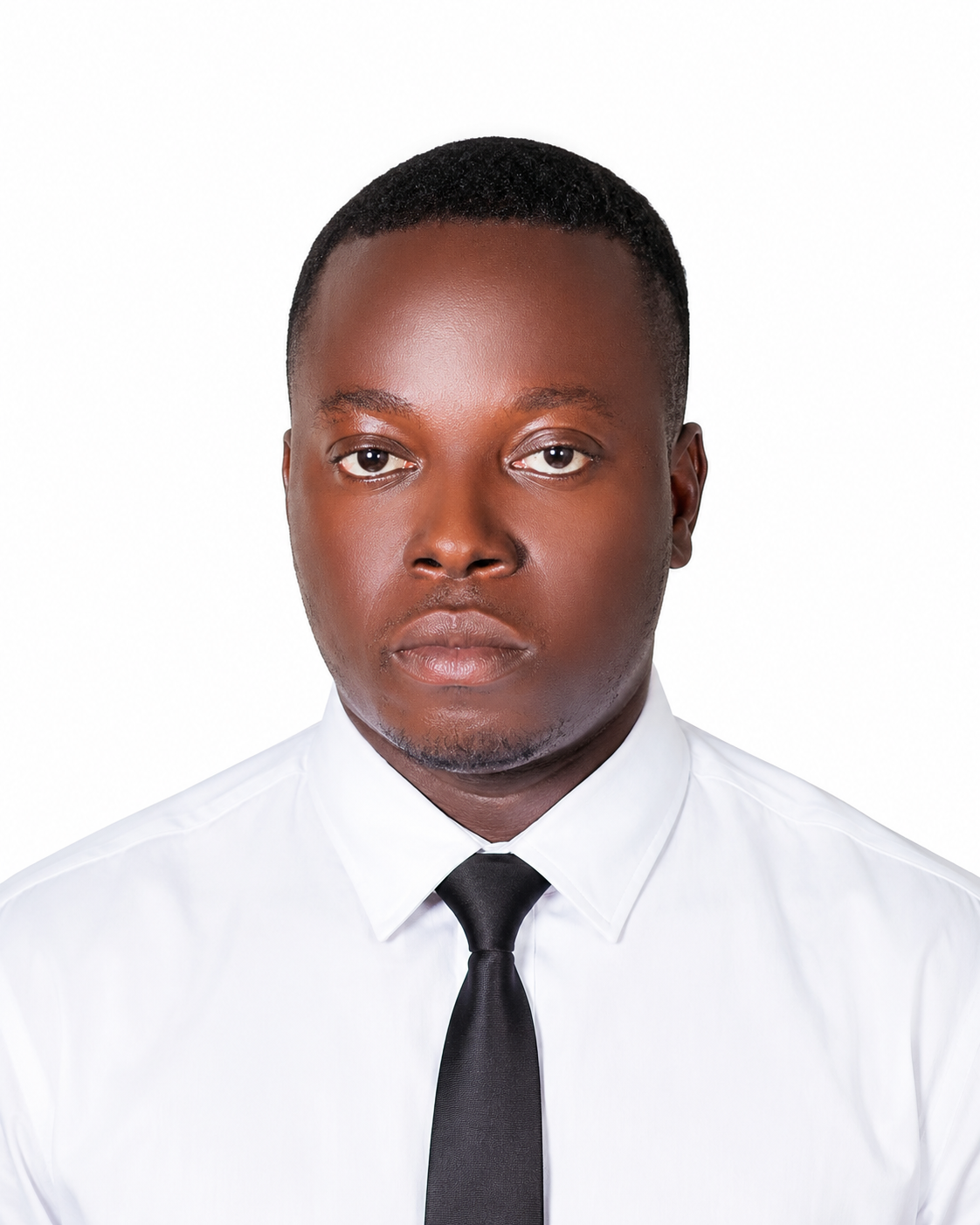
Christian Chinonso is the founder of LearnViaHub, with 6+ years of research experience in international education — including GPA systems, scholarships, student financing, and study-abroad guidance — for students worldwide.